The Iran conflict has expanded across the Middle East. In an unpredictable situation, we see good ways of mitigating risks and protecting portfolios.

Article last updated 31 March 2026.
Quick take• An unforeseen war has come to dominate markets in March. |
The war in Iran was a subject that was clearly missing from my last Quarterly Investment Update and has clearly been the dominant influence on markets since then. It’s always easy to buy low and sell high in hindsight. But investors have to apply their principles to the facts they know at the time and their best subjective assessment of what happens next.
At the beginning of March, this led us to the view that it was in nobody’s interest to prosecute a war in the Middle East that threatened oblivion on one side and severe economic dislocation on the other. From the perspective that the hostilities are continuing, one could say that we were wrong. But there’s been no material change in the underlying basis of our expectations. So for now, we haven’t reduced our overall exposure to equities and other risk assets, although this is always subject to change.
It’s well-documented that financial markets have a tendency to overshoot on the downside in response to geopolitical events, with investors who get caught up in the selling failing to benefit from the recovery that follows. Avoiding this pitfall would involve perfect timing on both sides of a trade that’s driven by forces well beyond any investor’s control.
Having said that, we remain acutely aware of the risks involved and construct portfolios with an eye on capital preservation. There can be a very fine line between deliberately maintaining one’s position in the eye of the storm and appearing complacent. Rest assured: even decisions that appear to involve a degree of inactivity are given as much consideration as those that involve big portfolio reshuffles – if not more.
Before the war
January and February were not short of incident:
- The year started with the dramatic capture and extraction of President Nicolás Maduro of Venezuela, followed by US threats to the sovereignty of Greenland.
- The US Supreme Court ruled that US President Donald Trump’s use of tariffs was illegal.
- Parts of the US government went into another shutdown as Congress failed to reach agreement on funding the Department of Homeland Security (whose head left under a cloud of tragic incidents in Minnesota).
- There was even a relatively well-received fiscal Spring Statement from the UK Chancellor, Rachel Reeves.
- The debate over the prospects and influence of artificial intelligence raged on while companies posted good results for the final quarter of 2025.
But everything has since been overshadowed by what’s happening in the Middle East.
In defiance of early US geopolitical agitation, both equity and bond markets started the year in good form, with global equity indices reaching new all-time highs by the end of February. Global growth seemed set fair. Inflation was reasonably well under control, which would allow central banks to continue cutting interest rates. There was a healthy broadening of performance as investors sought out companies that might benefit from increased investment in more resilient supply chains, local infrastructure. and defence.
The latter was dubbed the ‘Halo’ trade, standing for “hard assets, low (risk of) obsolescence”. It was the antidote to increasing fears about the long-term profitability of software and other white-collar service companies at risk from AI disruption. When the dust settles in the Middle East, it would be reasonable to expect this trade to reassert itself. Indeed, the effects of the war in Iran only serve to emphasise the risks to global supply chains.
March madness
The last day of February signalled a distinct shift as the US and Israel initiated attacks on Iran. We’ve covered this extensively in the Weekly and Monthly Digest and other publications on Rathbones’ Knowledge and Insight page, most recently in our latest investment webinar. Investors at first shared the hopes of President Trump that this might be a relatively short-lived affair. But as the month wore on, it became clear that the US and Israel had failed to deliver their intended knock-out punch.
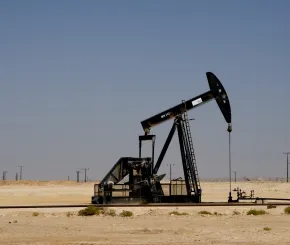
Beyond the closing of the Strait of Hormuz, and well-documented disruption to oil and gas shipments, the other shock element of Iran’s response has been to attack infrastructure in other Gulf states. Especially the damage to Qatar’s liquefied natural gas (LNG) processing facilities, because Qatar provides a fifth of global needs. LNG not only provides an essential energy supply, but also feedstock for other important industrial commodities used for many crucial products, from fertilisers to computer chips.
It’s almost impossible to call the outcome of the war with any degree of certainty. But we can infer from sentiment surveys, data on investors’ positioning and market performance what might be priced in. The latest Deutsche Bank client survey showed just over half of respondents believing a ceasefire can be reached by the end of April. If that doesn’t happen, the negative effects will only multiply as existing stockpiles of key commodities are run down and shortages begin to have a more severely negative economic impact.
Indicators from Goldman Sachs and Deutsche Bank show investor exposure to equity markets is lower than average, which at least suggests a limitation to any forced selling for now, should the news turn even more negative. It also implies some buying power at hand in the event of good news. Retail investors have also reduced their investment in equity markets, another signal that some of the speculative froth has been blown off.
Although equities suffered a sharp reversal in March, it’s been a steady grind lower rather than a dramatic collapse. This suggests that investors are taking a Bayesian approach, named after the eighteenth-century English intellectual Thomas Bayes, of updating your beliefs as new evidence comes in.
A steady decline since war broke out
Central banks’ dilemma
Investors are not the only ones facing such dilemmas. Central bankers are equally exercised, having to balance the risks of higher inflation against those of weaker economic growth. There’s been a big shift in interest-rate expectations, given the potential for an energy-induced inflation shock. From hoping for more cuts from the US Federal Reserve, the Bank of England and the European Central Bank, investors are now wary of possible increases.
Bond yields have also jumped, with investors demanding more compensation for higher and more volatile inflation, as well as threats to government finances as debt costs and military spending go up.
It’s been our strategy to avoid longer-dated governments for precisely the reasons that are currently evident. When inflation concerns are rising, just as they were after Russia’s full-scale invasion of Ukraine in 2022, these longer-dated bonds don’t provide investors with any real diversification benefits.
Bonds had much further to fall in 2022
Even so, we don’t think we’re about to see a rerun of 2022’s severe market falls. Equity markets offer better value today. In the current situation, interest rates and bond yields have started from a higher base, which means the extreme ‘repricing’ of yields we saw four years ago is unlikely to be repeated.
Inflationary pressures from consumer demand are also more muted now compared with the euphoric period immediately after the pandemic. Labour markets are slacker too (meaning less leverage in wage negotiations). Meanwhile, long-term inflation expectations remain relatively subdued.
The next final frontier
Looking further ahead, there are plenty of opportunities. Both countries and companies will seek to increase investment in resilience and will look for ways to reduce their dependency on dominant, yet vulnerable, suppliers of commodities and services. The growth of AI will no doubt return to the top of the investment agenda and again provide potential sources of new wealth.
And companies are still wheeling and dealing. The consumer goods giant Unilever is in talks to sell its remaining food brands for $15.7bn. Drinks companies Pernod Ricard and Brown Forman are reportedly discussing a merger worth more than $30bn. We might even begin to see outer space becoming the new investment frontier, especially if Elon Musk succeeds in his plans to list his SpaceX extra-terrestrial exploration unit on the stock market this year.