


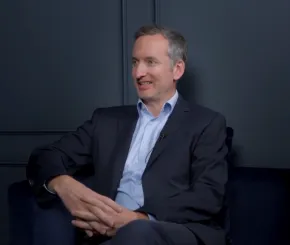
A discussion around our thinking and positioning of the multi-asset and model portfolios.

Article last updated 13 January 2026.

Article last updated 13 January 2026.
The role of a financial adviser has shifted away from picking products and investments to providing a more holistic financial planning service that focuses on long-term goals.
Providing this kind of service is demanding, and many advisers no longer have time to spend on building clients’ portfolios and handling mundane admin.
That’s why many advisers are turning to model portfolio services (MPSs) to manage clients’ investments on their behalf.
For over 30 years, we’ve partnered with advisers to deliver tailored investment strategies, and our dedicated multi-asset team brings more than two decades of experience in managing portfolios through changing markets.
Building on this expertise, our enhanced MPS service combines robust investment capabilities with operational efficiencies, designed to produce a better outcome for clients.
Our suite of seven portfolios, which are diversified across a risk spectrum from adventurous to conservative, are accessible through 14 adviser platforms. The pricing structure is designed to be competitive, providing advisers and their clients with a value-focused solution.
Our solution is designed to help deliver suitable outcomes for your clients, while freeing up valuable time for you to focus on the financial planning conversations that matter. We aim to provide a partnership that lets you focus on what advisers do best – building lasting client relationships – while we handle the investment complexity.
But you and your clients won’t feel out of the loop. We provide a comprehensive suite of client-ready materials, such as monthly factsheets and full holding lists. These resources help you maintain clear and consistent client communication and support alignment with Consumer Duty principles.
We also have a dedicated MPS support team available to assist with any investment or platform-related queries, ensuring you receive the guidance and support you need.
Cost is also an important factor for us, and we strive to ensure our MPS is competitively priced.
That’s why we offer our actively managed portfolios with:
As an active investment house, our pricing is among the most competitive available in the active MPS market.
Unlike many MPS solutions, we take a direct and truly active approach to investing, which provides us with greater flexibility and control over where we are allocating our capital and how we want to manage risk.
Being active allows us to buy the specific companies we want, targeting those with the structural tailwinds we like, strong balance sheets, quality management and paying what we determine to be the right price for a stock to drive the returns of the strategies.
We have specifically designed our MPS proposition to provide your clients with a more efficient investment outcome, and each portfolio is risk-targeted and designed to stay within defined volatility parameters.
Rather than being a traditional fund-of-funds offering, our MPS invests in three unique funds that have been designed and launched specifically for the MPS service.
Each model portfolio is built using three funds managed by Rathbones Asset Management. Together, they form the core building blocks of our risk framework: LED – liquidity, equity-type risk and diversifiers.
These funds are based on our proprietary risk framework, which aims to categorise assets into how they are likely to behave, particularly in times of stress.
The MPS then allocates to these funds with the aim of aligning your client portfolios to their risk profile, while seeking to manage risk through diversification.
It is designed to take account of factors such as lifestyle and time-horizon considerations within the chosen strategy. By managing assets through our LED framework, we aim to achieve broad diversification.
There are also significant benefits for clients and advisers from an operational perspective with using our building block approach. By executing trades within the underlying fund structure, we can adjust portfolio positioning without triggering changes at the individual account or platform level.
This enables us to:
This represents the liquidity element of the portfolios. This isn’t just cash – it includes government bonds and high-quality investment grade credit, which are designed to remain liquid, even in times of market stress.
These assets typically show low correlation to equities, making them an effective source of stability when markets become volatile. You would expect to see higher weightings to this fund in the lower risk strategies.
This fund invests in assets that are there to drive the growth of the portfolios, including equities and other securities with a high correlation to equity markets, such as lower-rated corporate and high yield bonds, private equity and emerging market debt.
You would expect to see higher weightings to this fund in the higher risk strategies.
This invests in those assets which can be used to both hedge specific risks as well as provide sources of return that don’t depend on the direction of equity or bond markets, such as gold and agricultural commodities, but also structured products with a low or negative correlation to equities.
This component is where the LED framework shows its real strength, providing genuine diversification to the portfolios and managing risk in a more targeted and resilient way.
At Rathbones, our differentiated approach to MPS aims to provide advisers with greater clarity, transparency and support. Available across leading investment platforms and compatible with major risk profilers, it offers a simple, scalable way to deliver discretionary investment management to your clients.
The value of investments can go down as well as up and your client could get back less than they invested.
The Rathbones Model Portfolio Service is managed by Rathbones Investment Management Limited, while Rathbones Asset Management is responsible for managing the underlying building block funds. Both companies are part of Rathbones Group plc.
It all starts with a conversation. To find out more about our enhanced Model Portfolio Service, simply fill out the form below and a member of our dedicated adviser support team will be in touch.

3 mins
Passive investing is often viewed as a low-risk, diversified approach, but today’s market structure challenges that assumption. With a growing concentration in mega-cap technology companies, index-tracking MPS may introduce unintended risks and limit responsiveness to market shifts. This article explores the implications for advisers and highlights the role of active management in navigating an increasingly uncertain investment landscape.