Investing to protect your family – so they can live well
17 September 2026
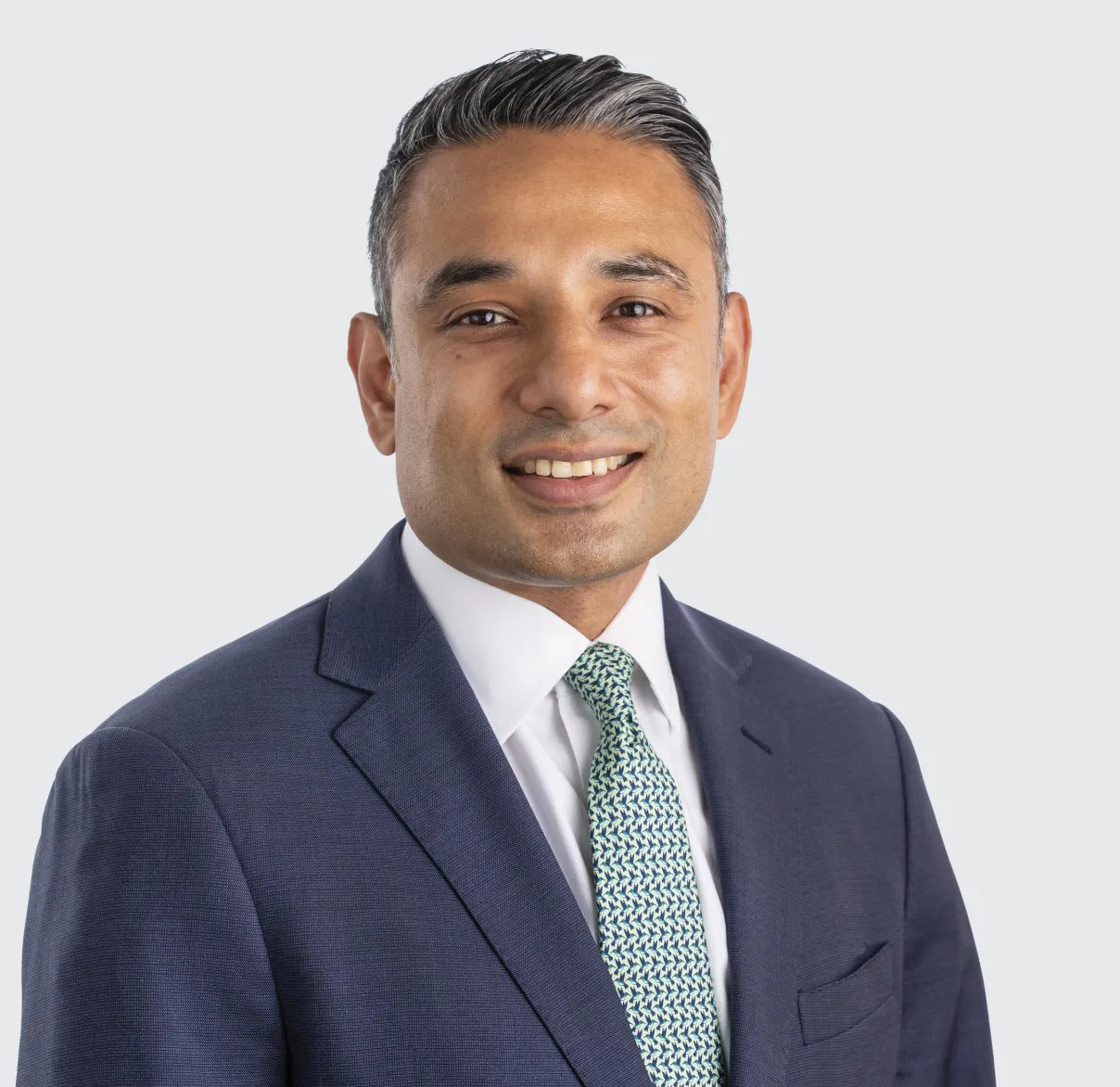
Harpal Sra is a Senior Investment Director in Rathbones’ London office and one of the UK’s leading specialists in Personal Injury investment management. He advises clients who have received compensation settlements following a catastrophic injury, and their legal representatives, on investment of those funds. Many of these clients are young adults or children, which means taking an extremely long-term view.
He also sits on the Rathbones Exchange-Traded Funds and Passive Investment Committee and is a Chartered Wealth Manager, Chartered Financial Planner, and Chartered FCSI with more than 20 years of experience.
Harpal supports several brain and spinal injury charities as a fundraiser.
For Harpal's clients, living well can mean having the confidence that their financial future is secure, enabling them and their families to focus on what matters most.
Harpal talks about how he helps clients invest for the very long term, to ensure their loved ones have the best possible quality of life.
Article last updated 17 September 2026.
When did you first begin to understand the importance of money in living well?
I grew up in a working-class household in London. My parents worked for the local authority, and on some summer weekends, they’d take on leaflet drops for a bit of extra money. As the oldest of three, I was allowed to go out on my own, up and down the high-rises, dropping leaflets through doors. That money paid for the nice-to-haves: maybe a holiday that year. I never felt I was wanting for anything, but I understood early that the extras in life required effort. By secondary school, I was doing a paper round before lessons. That was my first income.
I grew up understanding the value of education and professional qualifications in helping give people both fulfilment and the money to live well, even if the path wasn’t always straightforward. My father was a qualified lawyer in India. He chose not to do the conversion to qualify for UK practice, working multiple jobs instead. But my whole family valued education. For example, through education, one uncle back in Punjab became a high court judge; another became a respected engineer.
Harpal Sra | Senior Investment Director
I saw first-hand how long-term investors built and preserved wealth through markets.
Buying my first house. I was the first among my friends to do it through saving, some support from my parents, and the benefit of two incomes. That felt like a real achievement. Almost immediately, it became the focal point for my friendship group. That sense of having created something: a home, a base, a sign that things were moving forward – that was when money stopped being abstract and became real to me.
How did you come to understand the value of investing well, rather than just saving?
It wasn’t something I grew up with. In my family, as in many families with a similar background, the approach to money was: if you come into some, buy property. Bricks-and-mortar was regarded as a guaranteed route to wealth and was the default option. There was no awareness of investment portfolios in my world as I was growing up.
That changed when I moved into financial services. I saw first-hand how long-term investors built and preserved wealth through markets. I saw what compounding could do over time. And I started doing it myself. I realised that you could start with a much smaller amount than you needed for a property deposit. That accessibility matters – especially now, when property returns are likely to be lower for the next generation than for the last.
Your clients are in a very particular situation. What does ‘living well’ mean for them?
My clients are people who have received large settlements following catastrophic injuries. Many are young adults, some are children. A good proportion have a near-normal life expectancy – and with medical advances, that’s increasingly true even for those whose conditions would once have shortened it significantly.
For their families, the goal is twofold: make sure the money lasts and ensure their loved ones have the best possible quality of life. That means the best care, the best therapies, and the ability to fund cutting-edge diagnostics or medical equipment. It also means the freedom to do the things that matter to them. If they love to travel, it may, out of necessity rather than choice, need to be first-class, with larger cabins on cruises, and specially adapted vehicles. Travel costs significantly more for my clients than for most people. The investment horizon has to reflect that reality.
What’s the biggest worry you hear from the families you work with?
“What happens when we’re not here?” That’s the question that sits behind almost every conversation. Parents especially want to know that if they’re no longer around, there will be enough money for their child to be comfortable and free from financial worry. That’s the number one concern. It shapes everything we do: the investment strategy, the time horizon, the structures we put in place. Most clients work with a professional deputy or trustee, and we liaise closely with them on decisions about risk profile and portfolio changes. It’s a genuinely collaborative process because the stakes are so high and the clients themselves are often vulnerable to being taken advantage of.
Harpal Sra | Senior Investment Director
The best decisions to help you invest well are rarely the dramatic ones. They’re the quiet, consistent ones that you barely notice making.
For me, it’s about experiences rather than things. That could be family holidays, major music festivals, concerts or sporting occasions. The version of living well I aspire to is being able to say yes to those things without having to calculate what else we’d have to give up. At the moment, you pick and choose. We may have a bigger summer holiday and combine that with weekends away in the winter. That’s fine – but the goal is to reach a point where the decision is about what you want to do, not what you can afford.
Beyond that, my idea of living well is very much family-oriented. I have three daughters, all in primary school. My top ambition is to give them the best possible start, which for me means education. I would rather invest in their education than, say, buy them a property at 18. Give them the tools to find their own way, and the rest follows.
What advice would you give your younger self about investing well?
Start earlier than you think you need to, and don’t wait until you feel you have enough to make it worthwhile. The power of long-term investing is something I only really understood when I saw it working for other people. I wish I’d understood it sooner. And don’t default to property just because it’s familiar. It’s served many people well, but the world is changing. Financial assets, invested consistently over time, can do extraordinary things, and you can begin with far less than you think. The best decisions to help you invest well are rarely the dramatic ones. They’re the quiet, consistent ones that you barely notice making.