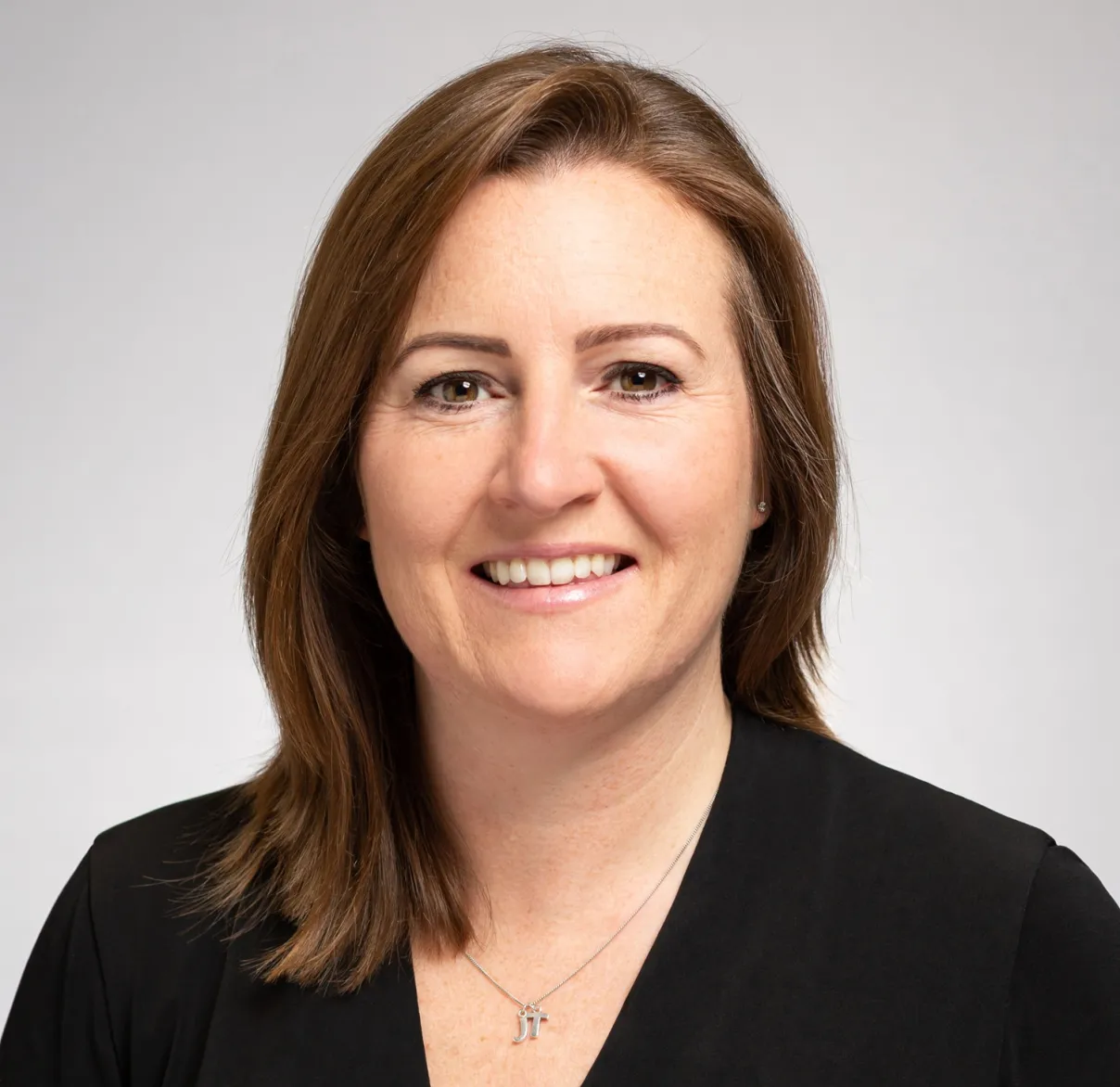
Michelle leads Rathbones’ Private Office, working with high- and ultra-high-net-worth clients whose wealth needs senior, coordinated support. She helps clients bring together financial planning, investment management, wealth structuring and specialist expertise, with particular experience in supporting US-connected clients, and families with international or more complex financial circumstances.
Michelle has spent her career helping people with significant wealth navigate the questions that matter most – not just where to invest, but what they’re investing for.
Michelle discusses creating structures for clients that help the next generation thrive.
Article last updated 17 September 2026.
What was the first lesson you learnt about money?
My path into finance was quite traditional in some ways. At school, I was good at maths, and went on to study international business and economics at university. But the maths lesson I remember most vividly is from when I left university. I took out a credit card, and my mother, a chartered accountant, made me pay it off in full every month. That discipline shaped my mindset – though, as a wealth manager, I’ve developed a more nuanced view of debt.
How has your thinking on borrowing and investing evolved?
The principle my mother taught me is sound, but it isn’t universal. If you think you can outperform the cost of debt, after fees, through higher investment returns, it doesn’t necessarily make sense to pay it off as soon as possible. We would never tell a client to keep paying 10% interest on a car loan while we try to make them investment returns. But for much lower rates of interest, it can make sense to employ some debt, while investing well for the long term. Leverage enables things. As long as you’re prudent and not overpaying, it can make sense. The lesson my mother taught me was right for where I was back then, clutching my first credit card. The skill is knowing when to apply that lesson and when to think differently.
What moment changed your idea of what living well could mean, as a young adult?
I remember paying cash for my first proper car – nothing extravagant, a silver Peugeot two-seater soft-top – but it felt like a real moment. I thought: I’ve actually made it, my hard work has paid off. And then buying my first property in London, which I did with a close friend because neither of us could have done it alone. I began to see money not just as an end in itself, but as something that enables an ambition – a certain kind of life. And it was my own hard work that had got me there.
What does that mean for how you approach smaller financial decisions?
My mother always said: "Look after the pennies and the pounds will look after themselves.” The read-across to our clients is that, when managing money well, they should never miss out on the small, annual ‘use-it-or-lose-it’ opportunities that HMRC gives you – for example, putting £20,000 per person into an ISA, or maximising pension contributions for all family members. You might look at that if you’re worth £25m or £150m and think, “these are rounding errors, they’re not worth bothering with”. But we would always say: "Maximise every one of those opportunities first.” Only after we’ve done that do we move on to more esoteric planning. The pennies matter. The pounds follow.
What’s the biggest challenge your clients face when it comes to investing well?
They worry most about ruining their children. We have many conversations with clients about what it’s all for – what their hopes and dreams are for the wealth they’ve worked so hard to create. And almost all of them are worried about their children becoming complacent. Most of our clients have worked incredibly hard and built real success. Clients are living the life they dreamed of, and they want to give their children that life too. But once you get past a certain point – and we look after clients with more than £5m entrusted to us to invest well – the question becomes: how do you get the next generation to work hard too, to create their own way of living well, rather than simply waiting to inherit?
Michelle White | Head of Private Office
Clients are living the life they dreamed of, and they want to give their children that life too. But the question becomes: how do you get the next generation to work hard and create their own way of living well, rather than simply waiting to inherit?
How do you help clients with getting their children to live well?
In the Private Office, we run a programme for children of our clients who are between 18 and 21, called the Pioneer Programme. They spend three days in our City of London office, where we immerse them in life skills: collaboration, critical thinking, presentation, and a smattering of financial education. We introduce them, gently, to the value of compounding, of planning, of starting early. Beyond that, we help clients structure their affairs for the benefit of future generations while retaining some control. Sometimes that’s through trusts – and if they’re minors, children don’t necessarily know they’re beneficiaries. Sometimes it’s through family investment companies. We also set up donor-advised funds, bringing children into decisions about how to give well. The goal is to keep them hungry – to give them structure without removing the incentive to build something of their own.
What about clients’ passions – the expensive hobbies that are part of living well?
The most common are cars, watches and jewellery. We have many clients who have gone beyond a few models to build genuine car collections – and that’s a wonderful thing. If you can buy any car you’re passionate about, regardless of the price tag, that’s a real achievement. Art is another area – we partner with Sotheby’s and other auction houses to help clients build collections wisely, considering how assets are taxed upon sale or at death. The key is that passion and prudence don’t have to be mutually exclusive.
How does investing well help them indulge their passions?
For our Private Office clients, where their portfolio isn’t a source of income, an articulate argument can be made for almost any risk profile being appropriate, because they’ve either got enough that they don’t need their investments to do a specific job or they can take the highest levels of risk as they have time to absorb any volatility. The main driver is emotional risk tolerance and appetite. Where the portfolio is used to supplement income, the drawdown becomes crucial: how much do they want to take out each year, and does the portfolio support that sustainably? If someone wants to spend a million pounds a year on cars, we design the portfolio around that. The passion is the starting point. The plan follows.
What advice would you give your younger self about investing well?
Look after the pennies. Start early. And be willing to challenge the rules you were taught – not to abandon them, but to understand when they apply and when they don’t. The discipline my mother gave me was invaluable. But the wisdom I’ve gained since is that good investing isn’t about rigid rules – it’s about understanding what you’re trying to achieve and making decisions that serve that goal. Money is a tool. The question is always: what are you building with it? The sooner you can answer that question clearly, the better every financial decision you make will be.