


  • Wealth Management
  • Asset Management
  • Wealth Management
  • Asset Management
Location
  • United Kingdom
    Language
  • Jersey
    Language
  • Guernsey
    Language
  • US
    Language
  • MyRathbones login
  • Financial Planning login
  • Donor Advised Fund login
Home
  • Who we help
    Who we help

    We help a wide range of clients invest well so that they can focus on what matters.

    Who we help
    • Individuals and families

      Focusing on you and your individual goals.

    • Entrepreneurs and business owners

      Helping turn the success of your business into financial security for your family.

    • Financial advisers

      Working with you, for your clients.

    • Charities

      Helping charities invest in line with their mission and values.

    • Professional partners

      We work with lawyers, accountants and other professionals.

  • Our services
    Services

    See our wide range of services tailored for your needs.

    Our services
    • Investment Management

      Looking for someone to create an investment portfolio for you?

    • Wealth Management

      Our combined investment and planning service for a holistic approach to your finances.

    • Financial Planning

      Need help reorganising your finances and planning for the future?

    • Asset Management

      Looking to invest in a fund? See our full range.

    • Tax, trust and legal services

      Structure your wealth for the future by bringing together legal, tax, family, and investment considerations.

    • Greenbank Sustainable Investing

      Looking for investments that align with your values? See our sustainable investment options.

    • Personal Injury and Court of Protection

      Rathbones’ dedicated personal injury (PI) and Court of Protection (COP) team.

    • Private Office

      Helping clients with £5m or more to protect, grow and structure their wealth for the long term.

    • Private Banking with Investec

      Private, corporate, and investment banking services through our partnership with Investec bank.

  • About us
    About us

    A leading UK wealth manager with roots dating back to 1742.

    About us
    • Careers

      Learn more about what it’s like to work at Rathbones, and search our current vacancies.

    • Corporate governance

      Learn more about our Board, Executive Committee and our approach to corporate governance.

    • Investor relations

      Find the Rathbones Group Plc financials, reports, investment case and key events.

    • Media centre

      Read the latest news from Rathbones Group.

    • MyRathbones – Our digital platform

      Our secure online portal and app, designed to give clients a clear view of their investments with us.

    • Our purpose

      Our driving purpose is to help more people invest well, so they can live well.

    • Responsible business

      We believe in doing the right thing for our clients and for others too.

    • Awards

      Our awards and industry recognition reflects our commitment to exceptional wealth management.

  • Insights
    Insights

    Read the latest news and market commentary from our specialists.

    Insights
    • Financial planning

      Explore a range of topics affecting your finances, from retirement planning to the latest legislative changes.

    • Investing

      Read about the key investment themes affecting global markets.

    • Podcasts

      Listen in to or watch our specialists in one of our podcasts.

    • Responsible investing

      Explore our articles, reports and events on investing responsibly.

    • Webinars

      Timely insights, real conversations. Watch live or catch up anytime.

  • Contacts
    Contacts

    Whether you have a question about our services, or need to talk someone specific, we can help.

    Contacts
    • Our offices

      Find your local Rathbones office. We have 21 across the UK and Channel Islands.

    • Our people

      Find the contact details for your Rathbones team by searching our people’s directory.

    • Let's talk

      Our team will be in touch to help you book a no obligation consultation with an adviser.

    • Our media contacts

      Access the contact details for our media team.

    • Other contacts

      Need to contact us about something else? Here you'll find all the options.

Let's talk

SearchStax standalone input

What does the 2026 UK Autumn Budget mean for the economy?

28 October 2026

We look into the impact of John Healey's inaugural Budget.


Adam Hoyes, Senior Asset Allocation Analyst, and Alex Waters, Head of Asset Allocation
  1. Home
  2. Knowledge and Insight
  3. What does the 2026 UK Autumn Budget mean for the economy?

Article last updated 28 October 2026.

Quick take

  • The Chancellor has succeeded in keeping the government bond market calm with his first Budget.
  • He’s also managed to provide a little relief for households and businesses struggling with higher costs.
  • But this was a small Budget. Big fiscal questions remain unanswered, and there was little to boost the economic growth on which tax revenue depends. 


The ‘breathing space’ delivered by Chancellor John Healey today will be welcome for many, and he deserves some credit for managing the fiscal impact of the Iran conflict while keeping the bond market onside. But overall, this was a small Budget. Hard decisions have been delayed again, and what we heard today was certainly not a growth strategy. In the long run, faster economic growth will be central to improving the state of the public finances. That’s what Andy Burnham’s government needs to focus on for the remainder of its term in office.


Two clear goals

John Healey had two clear goals going into his first Budget. First, respond to the erosion of fiscal headroom (the buffer against the government’s fiscal rules) caused by the inflationary impact of the Iran conflict, while keeping bond investors onside and within the confines of the 2024 Labour manifesto. Second, provide some marginal relief for households and businesses struggling with higher costs, ideally in a fashion that provides the best political bang for his buck. 

Broadly speaking, he appears to have achieved both today.

At the last forecast round in March, the government had £24bn of headroom against its fiscal rule, which requires day-to-day spending to be fully covered by tax revenue by 2029-30. In the months since, the Office for Budget Responsibility, a government body that provides independent analysis and forecasts, judged that headroom had been cut in half, to £12bn, largely due to the inflationary effects of the Iran conflict. Healey’s policy changes restored some of that, taking headroom back up to £15bn. This was sensible and broadly in line with expectations, which helps explain the muted reaction in the UK government bond market so far.

While the Chancellor hiked taxes on a net basis for the year 2029-30 (when the fiscal rule needs to be met), he opted to cut taxes, increase spending, and borrow more in the immediate future, in part to limit the impact of rising energy costs. This will come through an array of small measures presumably designed to get the largest political payoff for the smallest cost to the Exchequer. Policies included the now-traditional extension of the freeze to fuel duty, an extension of the cut to VAT on energy bills, reductions in business rates, and a £100 council tax rebate for certain properties. More cynical readers may view that as a potential attempt at a pre-election giveaway.


Big questions still unanswered

Overall though, the changes made in this Budget are small in economic terms. Measured as the average annual impact on borrowing over the five years of the OBR forecast, this was the fourth smallest of the 35 UK fiscal events since the OBR was established in 2010. Perhaps unsurprisingly, then, many big questions remain unanswered.

For one, the government has not addressed some of the fiscal fiction built into the five-year forecast. For example, after accounting for the commitment to spend 3% of GDP on defence by 2030, and assuming real-terms NHS spending growth continues at the pace set out in the 2025 Spending Review, other government departments will need to make real-terms cuts to spending to stay in line with the total departmental spending forecast set out today. That’s likely to be tough for a Labour government to implement.

There are also question marks about the credibility of other assumptions underpinning the fiscal projections. We are supposed to believe that the government will begin raising fuel duty in line with inflation again when the latest freeze is due to expire in July, but successive governments have declined to do this, stretching all the way back to 2011. This all highlights the significant risk that borrowing surprises to the upside over the next few years, relative to the latest forecasts, as has been the case time and time again in the UK over decades (and was the case again at this Budget – see the chart below.)


Government borrowing has generally been higher than the OBR's forecasts

The dark line shows actual borrowing. Choose any number of dates from the panel below to see any forecasts made since 2017.


This is all before taking into account the longer-term ambitions the Burnham government appears to have in areas such as social care and housing. With this in mind, it seems unlikely that government debt-to-GDP will fall significantly from its current high level. After all, despite the planned fiscal consolidation in the forecasts set out today, the debt burden is still expected to remain at close to current levels for the foreseeable future. (However, it is worth adding that the expected trajectory of debt-to-GDP is much better than in some other advanced economies such as the US - see the chart below. We've also discussed recently what the US mid-terms elections might mean for its fiscal situation.)


The Budget won't make a great difference to the UK's debt position

But the trajectory is much better than for the US.

Ultimately, the only way to raise living standards, fund government ambitions, and reduce the UK’s debt burden is stronger economic growth. As we made clear in our recent Building Prosperity report about how make the UK economy grow faster, and as Healey himself acknowledged in his speech today, that needs to be investment-led. There is a solid consensus that low rates of investment are a key factor behind the UK’s sluggish economic performance over past decade or so.

In this regard, the Budget could have been worse. Healey steered clear of changes to pensions that could reduce the supply of financing to high-growth businesses, and declined to hike rates of capital gains tax. Moreover, there was no mention of a wealth tax. However, the Budget didn’t really improve the situation, either. Tweaks to business rates did nothing to rectify the existing disincentive for firms to upgrade their premises, there was no expansion of full expensing to more forms of investment, and damaging taxes such as stamp duty on shares and property remain.

Over the rest of its term in office, we think the government needs to focus on bringing forward significant reforms to boost investment across the economy, rather than tinkering at the edges. Devolution can be part of that, but it won’t be a silver bullet. The government should address the deeper barriers holding back saving, investment, and productivity, which is what ultimately determines living standards in the long run. It needs to stop focusing solely on making Britain’s economic problems slightly more bearable, and start making them substantially smaller.


A taxing problem

Watch our slideshow to see the economic forces that make it hard for the Treasury to fill its coffers. Hover over the graphics for exact numbers. 

Rathbones Wealth Apprentices Carlo Migliara and Gabriel Mimra assisted with this article.

This information reflects our general views and should not be taken as a recommendation or advice as to how any specific market is likely to perform. The value of investments can go down as well as up and you could get back less than you invested.

Download a PDF of this article

Take action

If you would like to talk to one of our team about the announcements in the Budget and how we could help you make a plan, please fill in the form below and we'll get in touch. Alternatively, please feel free to call us on 0330 390 9191 and we’d be happy to help.

I am a/an

If you need immediate assistance, please don't hesitate to call our Helpdesk at 0800 151 3355. We're available Monday to Friday, from 8am to 6pm (excluding bank holidays), and we're here to help with any questions or issues you may have.

If you're interested in registering for MyRathbones, please reach out to your investment manager directly or read more about the platform here.


If you are an existing client, please contact your investment manager or financial planner directly to address your query or visit ⁠our people page to find their details.


Book a call back

The new enquiries team are available between the hours of 9-5pm, Monday – Friday (excluding Bank Holidays).

We will endeavour to call you back within 1 hour, however if there’s a more convenient time for us to call you, let us know by choosing a date and time below. 


I’ve read Rathbones’ Privacy Policy, which explains how my personal information is used, and understand that I can always unsubscribe at any time.

Google analytics consent

More Autumn Budget coverage

UK parliament and Big Ben

7 minutes

28 October 2026

Autumn Budget 2026: What was announced and what it means for you

The key Autumn Budget 2026 changes to pensions, tax, and inheritance, and what they could mean for your plans.
Autumn Budget 2026: What was announced and what it means for you
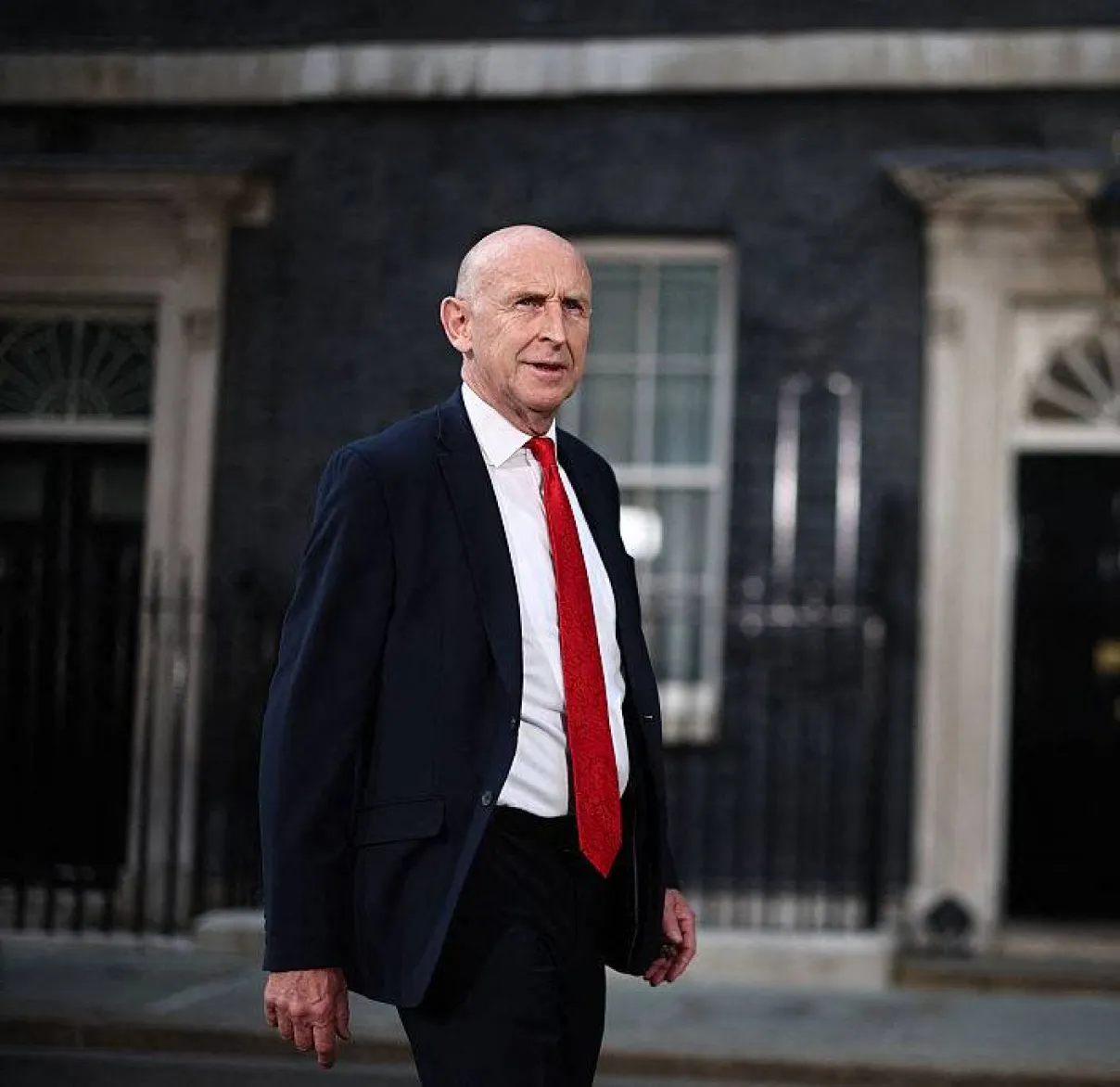
John Healey Autumn Budget 2026

8 mins

28 October 2026

Autumn Budget 2026: first thoughts from Private Office

What do the Budget announcements mean for those with significant wealth?

Autumn Budget 2026: first thoughts from Private Office
Sunlight bounces off the metallic architecture of the Lowry Arts Centre in Salford Quays of Greater Manchester

25 mins

26 October 2026

Building prosperity: The growth test

Are tax and economic policies helping or hindering investment, entrepreneurship and long-term prosperity? We share five recommendations to help the UK save, invest, and live well

Building prosperity: The growth test
Professional business woman standing on phone infront of navy blocked wall

5 minutes

19 October 2026

Autumn Budget 2026: financial planning tips for partners and senior executives

The Autumn Budget will generate plenty of headlines. But for partners, senior executives, and other high earners, the most important questions are often more personal.

Autumn Budget 2026: financial planning tips for partners and senior executives
Visit our Autumn Budget hub

Sign up for insights

Subscribe for Rathbones news, insights, and upcoming events delivered directly to your inbox.

I’ve read Rathbones’ Privacy Policy, which explains how my personal information is used, and understand that I can always unsubscribe at any time.

GA Consent trigger

Ready to start a conversation?

Make a plan with one of our experts

Your investment journey starts today
Let's talk
Rathbones Logo
  • Important information
    • Important information
    • Financial Services Compensation Scheme
    • Complaints and the Financial Ombudsman Service
    • Privacy policy
    • Accessibility
    • Investor relations centre
    • Cookies
    • Update cookie preferences
  • Important information 2
    • Fraud: Reporting and preventing it
    • Client help hub
    • Interest rates
    • Climate reporting
    • Corporate governance
    • Modern Slavery Statement
    • Sitemap
    • Website status and updates
Address

Rathbones Group Plc
30 Gresham Street
London
EC2V 7QN

© 2026 Rathbones Group Plc
Incorporated and registered in England and Wales.
Registered number 01000403

Follow us
  • Facebook
  • Instagram
  • LinkedIn
  • X
  • Youtube

The value of your investments and the income from them may go down as well as up, and you could get back less than you invested.

Wealth Management

You are leaving the {source} website
You are leaving the Rathbones {source} website and entering the Rathbones {destination} website.
Products, services and regulatory protections may differ between jurisdictions.
Would you like to continue?